


My Father Held On to a Windshield: Honoring Black Fathers' Legacy
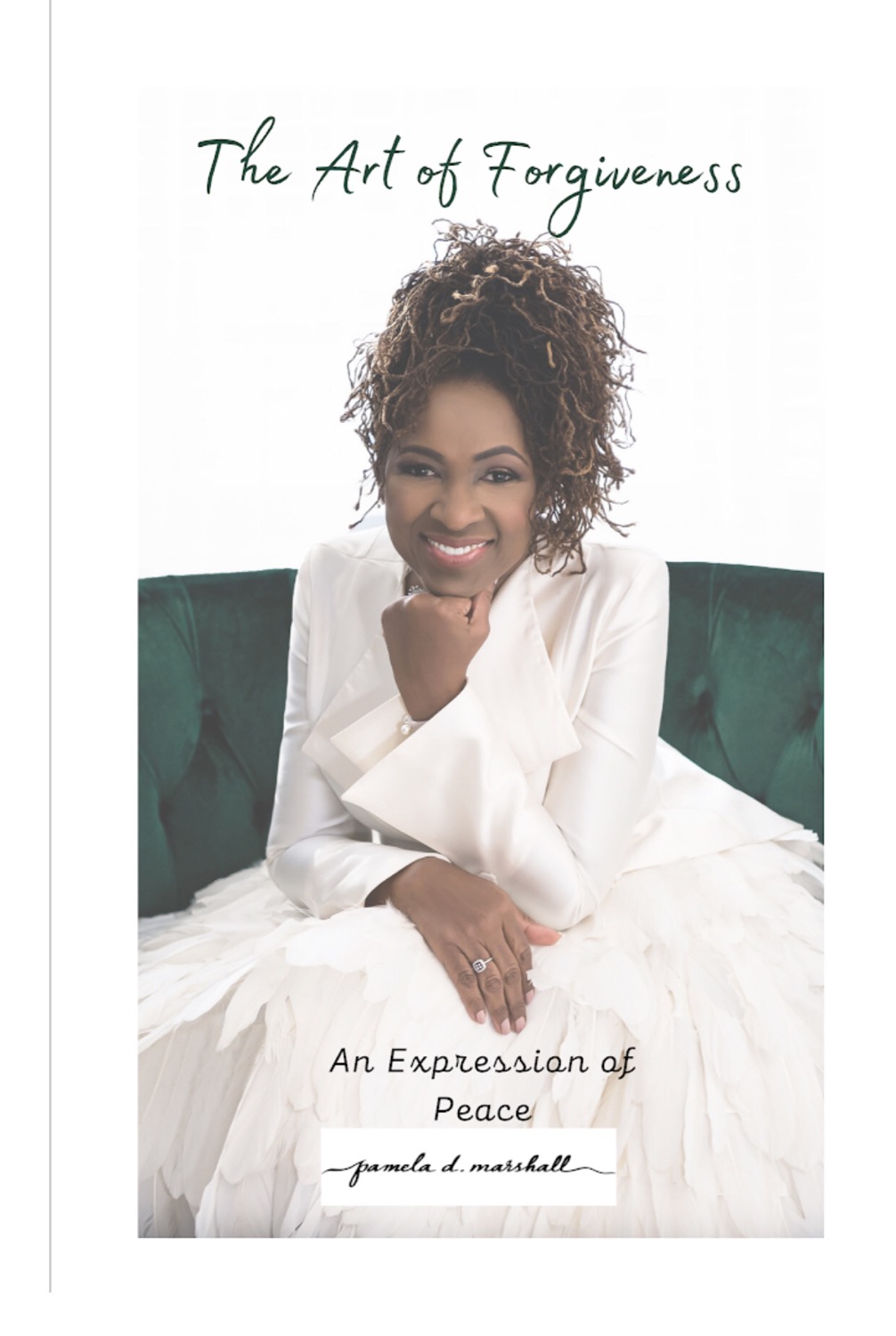
I honor my Daddy and all those whose survival made our lives possible.
My father, Elder Lenzie Marshall, Sr., was born in 1912, just one generation removed from the bondage of America's slave system. A system so cruel it often left little room for mourning, healing, or even telling the truth about what people endured.
Perhaps that is why so many stories went to the grave with our forefathers and foremothers. And perhaps that is why understanding Black fathers' legacy requires us to listen carefully, ask difficult questions, and honor the stories our fathers carried in silence.
Recently, my brother Franklin asked me a question that stopped me in my tracks: "Did Daddy ever tell you the story about the time he was hitchhiking from Medon into town?"
I had never heard it.
The Windshield: A Story of Survival That Defines Black Fathers' Legacy
According to Franklin, Daddy was a young boy walking along a country road when a car carrying several white men stopped and offered him a ride. But they never intended to let him sit inside the car.
Instead, they made him ride on the hood.
As the car sped down the road, the driver swerved back and forth, laughing while Daddy clung desperately to the windshield. The men struck at his hands, trying to force him to let go. They called him names. They treated his life as if it had no value.
I try to imagine what was going through Daddy's young, terrified mind.
Was he praying?
Was he thinking about his mother, who had died when he was 13 years old due to complications of childbirth?
Did he believe he would die on that road?
He couldn't jump off the car because he might have been run over. He couldn't let go because they were trying to make him fall. So he held on to the windshield for dear life while men laughed at the possibility of his death.
Then, for reasons we will never know, they pulled over and let him off.
Maybe someone in that car found a conscience. Maybe there was a man who said, "Enough." Maybe there was a modern-day John Brown among them.
I don't know.
What I do know is this: if my father had died on that road, I would not be here.
This is what understanding Black fathers' legacy means. It means recognizing that the presence of every Black child, every Black family, every Black generation is built on the survival of those who came before us.
The Silent Weight: Stories Never Told
As I have reflected on that story, I find myself wondering: How many stories did Daddy never tell us about the pain and humiliation he suffered being a Negro man during America's Jim Crow era?
Of all the stories he shared around family gatherings and he was one of the greatest storytellers I've ever known this story was never told to all of us.
Perhaps some pain was simply too heavy to revisit with words.
And perhaps that is one of the hidden legacies of slavery and segregation: not only the suffering itself, but the silence that often followed it. Black fathers' legacy is not only what we know it is also what remains unspoken, buried in the hearts of men who carried wounds they could never fully name.
Honoring Black Fathers' Legacy This Father's Day
This Father's Day, I honor my Daddy.
I honor the Black fathers who worked fields, factories, railroads, churches, and kitchens to build lives for their families while carrying burdens few people ever saw.
I honor the fathers who protected their children while navigating systems that often refused to protect them.
I honor the fathers whose names will never appear in history books, but whose sacrifices
made history possible.
Their survival became our inheritance. Their endurance gave us opportunities. Their courage is our foundation.
The Black fathers' legacy we celebrate is not built on ease or comfort. It is built on:
✓ Holding on when everything told them to let go ✓ Protecting their children in systems designed to devalue them ✓ Carrying pain in silence so their children could move forward ✓ Believing in a future they might never fully see ✓ Working with dignity in spaces that denied them dignity
Every Black child who exists, who thrives, who dreams, does so because a father somewhere held on.

Juneteenth and the Meaning of Black Fathers' Legacy
This year, Father's Day and Juneteenth have given me reason to pause and reflect deeply.
Juneteenth is not merely a celebration of freedom received. It is also a reminder that freedom must be protected, expanded, and extended to every generation.
The story of America has always included people who were willing to speak against injustice and others who remained silent. It has included people like John Brown, who asked before his execution:
"What crime have I committed by trying to free men from the bondage of slavery?"
History remembers his question because it still echoes today.
Every generation must wrestle with its own understanding of freedom. Every generation must decide whether liberty belongs to everyone or only to some. This generation, in 2026, must determine whether it will look away from suffering or confront it with courage.
And this is where Black fathers' legacy connects directly to the work of freedom. Our fathers did not merely survive. They survived with purpose. They endured so that we could be free—not just from chains, but free to imagine ourselves, free to dream, free to exist with dignity.

The True Meaning of Freedom and Black Fathers' Legacy
As we celebrate Juneteenth 2026, I find myself reflecting on the meaning of freedom—not only freedom from chains, but freedom to live with dignity, opportunity, hope, and justice.
Freedom is more than a historical event. It is a responsibility that must be practiced by every well-meaning human being. Freedom is the ongoing work of seeing the humanity in one another.
My father's story reminds me that our presence here is not guaranteed. Somewhere in every family's history is a moment when everything could have been different.
A father survived. A grandaddy endured. A great-grandfather held on. My Daddy, God rest his soul, held on to a windshield.
My granddaddy, Pop Albert Sr., held on to his faith. My great-grandfather, Jack Marshall, held on to dreams.
Others held on to the belief that their children would inherit a better world.
This is Black fathers' legacy, not one story, but a chorus of stories. Not one moment of courage, but generations of quiet, persistent, extraordinary resilience.
What We Owe to the Past and to Future Generations
This month, as we celebrate Father's Day and Juneteenth, may we honor those who held on long enough for us to arrive.
And may we leave behind a nation worthy of their sacrifice.
Understanding Black fathers' legacy is not about guilt or shame. It is about gratitude, responsibility, and commitment.
It is about recognizing that because our fathers held on, we have inherited:
The opportunity to tell our stories
The freedom to imagine ourselves as fully human
The responsibility to extend that freedom to others
The calling to hold on for the next generation
A Question for Our Nation
Today, I ask America this question: How would you like Colored people, Negroes, African Americans to celebrate Juneteenth 2026?
And more importantly: What does true freedom require of us all, today?
If Black fathers' legacy taught us anything, it is that freedom is not passive. It is not something we receive and then forget. Freedom is something we must actively choose, protect, and extend.
My father's story and the stories of countless other Black fathers demand that we answer this question not with words, but with action. Not with silence, but with truth. Not with indifference, but with courage.
This Week's Practice: Honoring Your Ancestors
Honoring Black fathers' legacy requires us to stand firmly in the truth of our history while moving forward with purpose.
This week, practice ancestral gratitude:
Sit quietly and think of a father, grandfather, or ancestor who sacrificed for you
Write down one story you know about their survival or strength
Ask the oldest person in your family for one untold story
Share that story with someone—don't let it die in silence
Make a commitment: What will you do to honor their legacy?
Because Black fathers' legacy lives on through us. Every time we tell a story. Every time we stand up for freedom. Every time we refuse to be silent about injustice. Every time we extend grace to the next generation.
Join the Conversation
Do you have a story about your father or ancestors that shaped who you are? This Father's Day and Juneteenth, I invite you to share it in the comments below. Let's honor Black fathers' legacy together by refusing to let these stories disappear.
Looking for more on Peace, healing, and finding your voice in the face of injustice?
For speaking engagements, workshops, or to bring messages of healing, justice, and ancestral honor to your organization, call 352-359-5760.


Comments