


What Are We Passing On to the Next Generation?
What Is the Light Revealing?
During these October mornings, I have noticed something beautiful about the dawning of each new day.

The colors along the horizon are changing. The oranges seem deeper. The light moves differently across the sky. Some mornings, the clouds create patterns I have never noticed before.
The earth is constantly changing, even when we are standing still.Perhaps we are changing, too.
Sometimes healing happens so gradually that we don’t recognize it until we respond differently to something that once disturbed our peace.
Will you do this with me?
This morning, find seven minutes of stillness.
Breathe deeply.
As you inhale, whisper: “Creator, let Your light enter every place within me that still needs healing.”
As you exhale: “I release what I no longer need to carry.”
1 John 1:5 reminds us: “God is light, and in him is no darkness at all.”
Now ask yourself: What part of my life needs more light and less judgment?
Don’t rush to answer. Sit quietly. Allow the Spirit to reveal what is ready to be seen.
Sometimes the beginning of healing is simply becoming willing to look in the eyes in the mirror.
Truth, Courage, and the Practice of Forgiveness
What Are We Passing On to the Next Generation?
The pain may have reached us. It does not have to continue through us.
When I was born in 1961, women who looked like my mother — and eventually like me — still could not freely vote across the South. The 19th Amendment prohibited denying women the vote on the basis of sex in 1920. Yet Black women and Black men continued to face poll taxes, literacy tests, intimidation, discrimination, and violence designed to keep them from the ballot box.
I was four years old when the Voting Rights Act of 1965 brought powerful federal protections against racial discrimination in voting. This is not ancient history. It happened during my lifetime.
As a girl, a woman, a female, a lady, I have often wondered: How is it that my body can grow a boy in my womb, but when that boy grows into a man, I have historically had to ask men:
Can I vote?
Can I own property?
Should I run for political office?
Can I lead a congregation?
Can I be President of the United States?
Even as a little girl in school, I noticed something that fascinated me. Mothers were trusted to manage children at home. Women cared for children in daycare centers. Schools were filled with women teachers educating and managing hundreds of children every day. And yet, the person sitting in the principal’s office was so often a man.
At some point we have to ask ourselves: Why did we accept this?
Some history makes me angry enough that I have to ask the Holy Spirit to settle my spirit before I speak. Because I want my words to tell the truth without allowing hatred to take up residence in me.
The Challenge of Telling the Truth Without Hatred
Mrs. Fannie Lou Hamer taught us something essential:
“If I hate you because you hate me, I’m no better than you.”
And there lies the challenge.
How do we tell the truth about injustice without allowing hatred to become our inheritance? How do we confront systems that need changing without becoming consumed by the very spirit we are trying to overcome? How do we teach the next generation what happened without teaching them whom to hate?
Those questions sit at the heart of forgiveness.
Forgiveness does not require us to erase history. It asks us to decide what we will do with the history we inherited.
Mrs. Fannie Lou Hamer Comes to Starke, Florida
I am humbled to have been invited to bring the words and spirit of Mrs. Fannie Lou Hamer to the Empowerment Sunday event in Starke, Florida, on Sunday, October 25 at 12:30 p.m.
I hope you will join us.
If Mrs. Hamer’s story needs to be heard in your community, church, school, organization, or gathering, please reach out about bringing
The Voice of Courage — The Fannie Lou Hamer Story to your community.
These stories are not simply about where we have been.
They ask us: What are we passing on to the next generation?

One Simple Call to Action: Tell One Story
This week, tell one younger person a story they need to know.
Tell them about someone in your family. Tell them about something you lived through. Tell them about Mrs. Fannie Lou Hamer. Tell them about someone whose courage opened a door they now walk through without having to knock.
And after you tell the story, don’t tell them what they should think. Ask them: “What does this story mean to you?”
Then listen.
Because passing history to the next generation should not only give them answers. It should teach them how to ask better questions.
The Practice: You Can Remember Without Remaining Wounded
I have learned something important about forgiveness.
Forgiveness does not require us to forget. In fact, remembering can be part of healing.
We remember so we can learn and protect ourselves and others. We remember so we can recognize patterns that should never be repeated. And we remember the courage of people such as Mrs. Fannie Lou Hamer so that the next generation understands that the freedoms they inherited were not always freely given.
But there is a difference between remembering an experience and continuing to live inside the pain of that experience.
Forgiving the Process
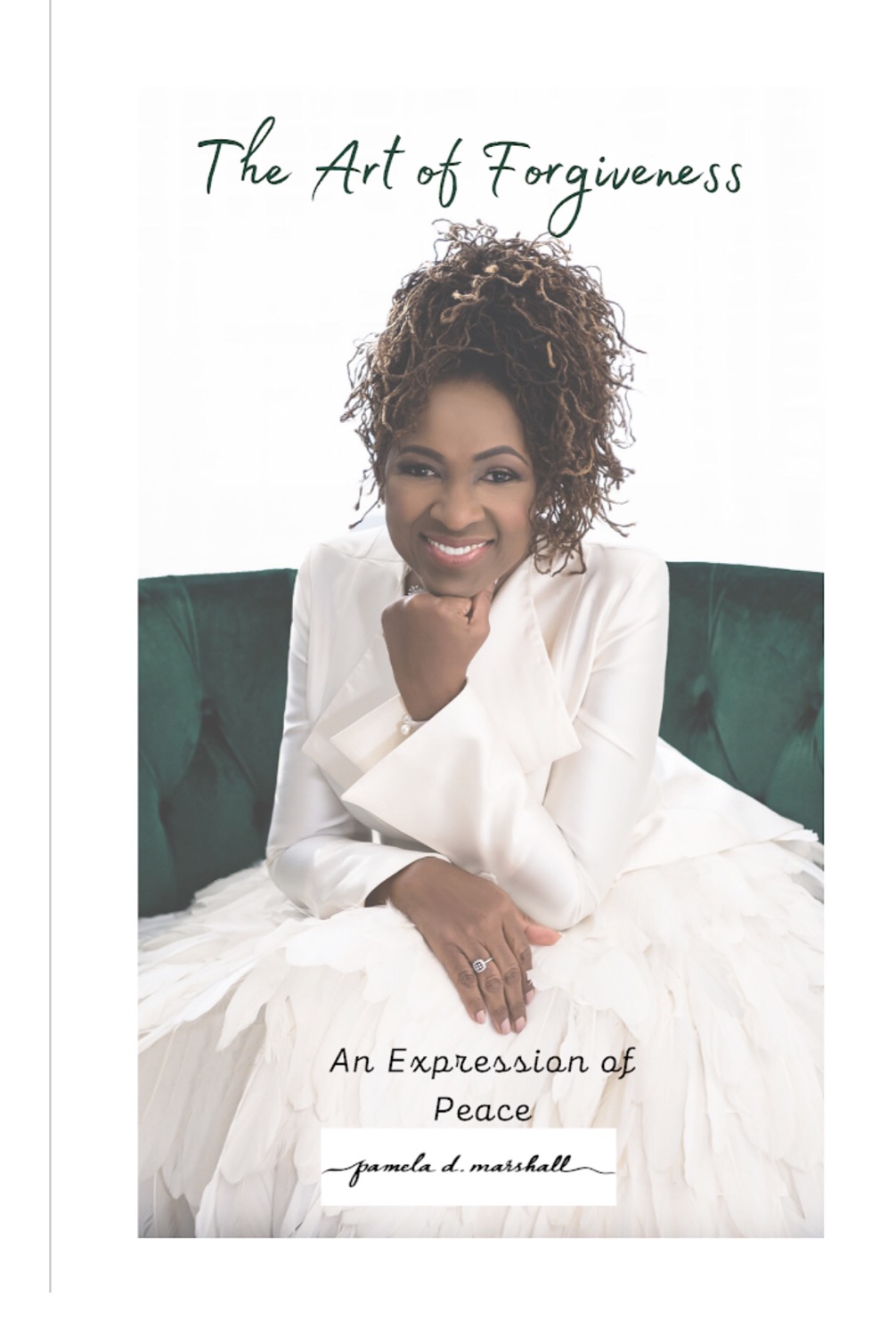
I continue to work on the revisions of my book, I Named Him Forgiveness — A Journey of Healing and Acceptance. I have asked myself many times why this book has been so difficult for me to finish and release.
I have set deadlines. Then I changed them. Life has interrupted the process — the passing of loved ones, home challenges, health concerns, and the emotional weight of the story itself. Part of my own practice has become learning to forgive myself for the deadlines I did not meet while accepting the very real life experiences that can interrupt the flow of writing a book this personal.
That, too, is acceptance and forgiveness.
I Named Him Forgiveness is a close look at how public policy impacts the very fiber of our being. It is my attempt to ask difficult questions about the systems, customs, and decisions that leave human beings wounded in body and spirit. This book is not a message of judgment. It is about healing and acceptance.
I invite you to pre-order your copy of I Named Him Forgiveness — A Journey of Healing and Acceptance.
Those who pre-order will be among the first to read it and, I hope, among the first to help begin the conversations that follow — conversations rooted not in judgment, but in healing.
The Pain Can Stop With Us
Have you ever noticed how easily pain travels?
Someone has a difficult morning and speaks harshly to a family member. That person carries the hurt into the workplace. Someone else becomes the recipient of frustration they did not create. And the pain keeps moving.
Families can do this for generations. So can communities. So can nations.
But what if somebody decides to interrupt the journey?What if someone says:
“This pain has traveled far enough. It will not travel through me.”
That does not mean we deny anger, grief, or disappointment. Anger can tell us something is wrong. Grief tells us something mattered. Fear can alert us to danger.
But those emotions do not have to determine what we pass along.
Ephesians 4:32 tells us: “And be ye kind one to another, tenderhearted, forgiving one another…”
Tenderhearted. What a beautiful word. In a world that often rewards hardness, Scripture invites us to remain tender. Not defenseless. Not silent. Not without boundaries.Tender. Strong enough to tell the truth without needing hatred to tell it for us.
After the Applause
Some experiences stay with you long after the applause. Bringing Mrs. Fannie Lou Hamer’s Voice of Courage to the United Church of Gainesville was one of those sacred moments for me.
As I stepped into Mrs. Hamer’s voice to deliver the morning message, I felt the spiritual weight of her faith, her courage, and her determination that freedom must belong to everyone. Her story calls us to examine how we live, how we love, and how we stand for one another.
Thank you, Dr. Talia Raymond, for the invitation, and thank you to the UCG family for embracing Mrs. Hamer and me with such warmth.
“No one is free until we all are free.”— Fannie Lou Hamer
Rev. Dr. Talia Raymond Min. of Spiritual Curiosity and Programs
What Will They Inherit From Us?
I cannot change the world into which I was born. I cannot go back to 1961 and alter the laws, customs, or attitudes that determined what women and Black Americans were permitted to do. I cannot undo what Mrs. Hamer endured. I cannot undo the violence, discrimination, or pain carried by the generations before us.
But I can decide what I do with what they handed me. And so can you.
We can pass along the pain.
Or we can pass along the lesson.
We can pass along hatred.
Or we can pass along the courage to confront injustice without surrendering our humanity.
We can pass along silence.
Or we can tell the truth.
We can hand our children wounds we never examined. Or we can do the difficult work of healing them before placing them into another generation’s hands.
That may be one of the most important reasons we practice forgiveness.
Not simply so we can be free. But so somebody coming behind us doesn’t have to carry something that should have ended with us.
The pain may have reached us. But it does not have to continue through us.
So I return to Mrs. Fannie Lou Hamer:
“If I hate you because you hate me, I’m no better than you.”
Tell the truth.
Use your voice.
Stand for what is right.
Remember those who came before you.
And then decide carefully what you are going to place into the hands of those coming next.
Join the Movement
Looking for more ways to support empowerment and cultural literacy?
For speaking engagements, school visits, or performance bookings, call 352-359-5760 OR Contact Me *Here.


Comments